Vinnie's ABBA Blog
Welcome to my Blog
ABBA - A most indulgent pleasure
Follow me on TikTok
The ABBA Man

ABBA Super- stars from Humble Beginnings to Superstardom ABBA have certainly left their mark on the music industry and the world as a whole
ABBA’s story begins in Sweden in the late 1960s with two musical couples whose paths crossed through the pop and folk scene.
1. The people who are they?
Björn Ulvaeus was in a popular Swedish folk group called Hootenanny Singers.
Benny Andersson played keyboards in the hit Swedish rock band Hep Stars.
They met in 1966, started writing songs together, and quickly realized they worked well as a team.
2. Enter Agnetha & Anni-FridAgnetha Fältskog was already a successful solo pop singer in Sweden.
Anni-Frid Lyngstad (Frida) had won a national talent competition and was building her own career.
Both women met Björn and Benny through Sweden’s tight-knit music community—and eventually through romantic relationships (Agnetha with Björn, Frida with Benny).
3. Early collaborationsIn 1970, the four performed together for fun under the name “Festfolk” (Swedish for “party people,” but also slang for “engaged couples”). The name didn’t stick, and their early shows didn’t take off.
They kept performing together occasionally, often on TV specials, while still pursuing their individual careers.
4. Breakthrough momentIn 1972, they recorded People Need Love as “Björn & Benny, Agnetha & Anni-Frid.” It became a hit in Sweden.
Their big break came in 1974 when they entered the Eurovision Song Contest representing Sweden with Waterloo. They won—and that win turned them into an international pop sensation.
5. The name “ABBA”They officially adopted the name ABBA in 1973, using the initials of their first names (Agnetha, Björn, Benny, Anni-Frid). Coincidentally, “Abba” was also the name of a Swedish canned fish company, which they had to get permission from to use.
From there, the hits poured out—Mamma Mia, Dancing Queen, Fernando—and by the late ’70s, ABBA was one of the biggest pop acts in the world.
ABBA ARRIVAL

ABBA’s Arrival is their fourth studio album, released on 11 October 1976, and is widely considered one of their career-defining works. It marks the point where ABBA fully solidified their signature polished pop sound and started dominating the international charts.
1. Background and Recording
- Recorded mainly at Metronome Studios in Stockholm during 1976.
- The group was building on the success of ABBA (1975) and Waterloo (1974), aiming for a more cohesive and radio-friendly collection.
- Benny Andersson and Björn Ulvaeus took the lead in songwriting and production, with Agnetha Fältskog and Anni-Frid Lyngstad providing the iconic vocals.
2. Notable Tracks
- “Dancing Queen” – ABBA’s most famous song, and their only No. 1 hit in the United States. It’s a disco-pop anthem that became a global phenomenon.
- “Money, Money, Money” – A dramatic, cabaret-style track driven by Frida’s theatrical vocals.
- “Knowing Me, Knowing You” – A melancholic breakup ballad that became another huge international hit.
- “Fernando” – Although originally released as a non-album single, it was included in the Australian and New Zealand versions of Arrival.
3. Chart Success
- The album topped the charts in many countries, including the UK, Sweden, Norway, and Australia.
- In the UK, it spent 8 weeks at No. 1 and stayed on the charts for over a year.
- Arrival became one of the best-selling albums of the 1970s in several markets.
4. Album Cover
- The famous cover shows ABBA inside a Bell 47 helicopter, photographed by Ola Lager. The helicopter symbolised the “arrival” theme — both in a literal sense and metaphorically as their arrival at superstardom.
5. Legacy
- Critics at the time were mixed, but over the years Arrival has been recognised as a pop classic.
- Its mix of disco, Europop, and ballads set the template for ABBA’s late-’70s dominance.
- Many tracks remain staples of ABBA’s compilations and stage shows, including Mamma Mia! the musical.
ABBA and Stranger Things !!
It’s an unfortunate combination, or is it? ABBA’s 1976 hit song “Fernando” is featured in the final season of Netflix's Stranger Things (premiering late 2025/early 2026), continuing the show's tradition of resurgent classic hits. The song is used in a key, emotional scene, with reports suggesting it underscores a significant moment as characters face threats from the Upside Down
Check out the Scene
ABBA The Album
In My opinion ABBA's finest hour

A
ABBA’s 1977 album titled The Album was released on 12 December 1977 (in Scandinavia) and early 1978 in other territories.
It was their fifth worldwide release (fourth in some countries), coming out alongside the group’s first major feature film, ABBA: The Movie. The songs reflected both their growing ambition as songwriters and their desire to move beyond just catchy singles into more complex pop.
Key FactsRelease date: 12 December 1977 (Scandinavia), January 1978 (worldwide)
Recorded: May – November 1977 at Marcus Music and Metronome Studios, Stockholm
Label: Polar Music (Sweden), Epic (UK), Atlantic (US)
Producers: Benny Andersson, Björn Ulvaeus
Genres: Pop, pop rock, soft rock
Track ListingEagle – Expansive, atmospheric pop-rock with soaring harmonies; one of ABBA’s longest tracks.
Take a Chance on Me – Upbeat, playful, and one of ABBA’s biggest hits worldwide.
One Man, One Woman – Melancholic ballad with Frida on lead vocals.
The Name of the Game – Soul-influenced mid-tempo track; innovative production for ABBA at the time.
Move On – Philosophical song about life’s journey, with spoken word and strong harmonies.
Hole in Your Soul – Rock ‘n’ roll-flavored track with high energy, often used as a concert closer
.
Thank You for the Music – Part of The Girl with the Golden Hair mini-musical; a love letter to music itself.
I Wonder (Departure) – Emotional ballad about following one’s dreams, also from the mini-musical.
I’m a Marionette – Dramatic, almost theatrical piece with darker undertones, closing the album.
Notable Points
Side two of the album contains a three-song “mini-musical” called The Girl with the Golden Hair, performed during their 1977 tour, which showcased a more theatrical and narrative-driven style.“Take a Chance on Me” became one of their most enduring hits, topping charts in multiple countries.
The album had a more mature and serious tone compared to earlier work, though it still contained playful pop moments.
The cover features the band photographed against a pale blue backdrop, with their names in large bold letters above — simple but striking.
Listen to the full album here
ABBA Voyage

Before launching the Voyage show, ABBA released a nostalgic video highlighting their trip to Australia—a journey that played a crucial role in shaping their success. Without the support and enthusiasm from Australia, ABBA might never have reached the heights they enjoy today.
Book ABBA Voyage tickets
The animated sequence in "ABBA Voyage" showcases an impressive combination of state-of-the-art technology and artistic vision. It was crafted by the visual team at Industrial Light & Magic (ILM), renowned for their pioneering contributions to visual effects.
The performance features digital avatars of the band members, enabling them to share the stage with a live band in a groundbreaking concert format. This animation enriches the live show, enhancing the experience of ABBA's music in an engaging manner. The entire production highlights a blend of nostalgia with contemporary innovation, resonating with both longtime fans and newcomers alike.having been 5 times, i would encourage anyone to go its the best feel good show which seems to disolve time and gives a full visual sensory overload to those watching.
The making of ABBA Voyage
ABBA and Nexus Shynola
Who Is Rora?
Rora is depicted as a curious, adventurous explorer embarking on a mystical, psychedelic pilgrimage in a vividly animated realm. The narrative unfolds in two parts, matching the ABBA songs “Eagle” and “Voulez-Vous”. In this surreal journey, Rora discovers an ancient artifact buried in a snowy, Scandinavian-like forest — the catalyst for a transcendent voyage through extraordinary landscapes .
The Story JourneyFirst Short – “Eagle”:
The film opens with Rora searching amidst a frosty, mystical woodland. Upon finding an ancient relic, they are transported into enchanted realms filled with surreal, Escher-style environments, flying creatures, and symbolic figures such as blue and yellow guardian statues reminiscent of Agnetha and Frida’s 1975 costumes .
Second Short – “Voulez-Vous”:
The narrative continues with Rora on their quest, journeying through vibrant, at times perilous terrains. The visuals complement the hypnotic rhythm of the music, reinforcing Rora’s determined exploration .
Interpretations and ReceptionArtistic Contrast & Purpose:
These animated sequences act as evocative interludes within the concert, providing respite for attendees and bridging between high-energy musical performances .
Audience Reactions:
Some found the narrative intriguing and evocative of the overarching Voyage theme—an odyssey toward legacy and discovery . Others, however, felt the abstract quest narrative didn’t closely align with the song lyrics or mood, finding the connection somewhat puzzling .

Summary
Rora’s tale is a cinematic, collective-visual interpretation—an enchanting, symbolic journey rather than a literal storyline. It amplifies the immersive nature of the live show, blending mythology, nostalgia, and dreamlike imagery. These fantasies serve as a poetic counterpoint to ABBA’s music, inviting viewers (and listeners) to embark on a metaphorical voyage into imagination.
A link to Nexux Studios below
Nexus Studios
The Story Behind the “Tron”-Like Suits
A Modern, Digital Aesthetic
In the segment following Lay All Your Love On Me, ABBA’s avatars (or “ABBAtars”) appear in luminous, cyber-inspired jumpsuits—highlighted by neon-like piping and subtle lighting—that evoke a Tron-style, electronic aesthetic. Reviewers describe it as the moment the group “makes a serious bid to out-robot Kraftwerk in 3D with their luminous Tron suits” .
Digitized, Not Worn Live
Although the band never physically donned these costumes, each design was meticulously crafted and then scanned or digitized by Industrial Light & Magic (ILM) to be rendered on the ABBAtars. ILM’s team recreated every stitch, sequin, and texture in detail—ensuring movement and lighting looked lifelike and responsive .
Materials & Designers
Erevos Aether, a Greek design studio based in London, was responsible for creating these wearable, light-up “ABBAtron” outfits. They used materials like plexi and neoprene—ideal for integrating illumination while allowing stage movement .
Costume director Bea Åkerlund collaborated with designers including Manish Arora, Michael Schmidt, and Dolce & Gabbana, combining high-fashion sensibilities with futuristic flair to craft overall looks that both honoured ABBA’s aesthetic legacy and reimagined it for a digital age .
Technical Precision & Visual Impact
ILM didn’t just CGI the costumes—they also simulated how each outfit would physically react to movement. From lighting to fabric flow and stitching detail, everything was processed to achieve seamless realism when projected by the ABBAtars in the 3D digital environment .
Why They Matter
Enhanced Immersion: These Tron-style looks aren’t just aesthetic—they amplify the concert’s blend of nostalgia and futuristic spectacle, symbolizing ABBA as timeless icons who transcend eras.
Technological Brilliance
The effort melds couture costume design with advanced motion capture and CGI, demonstrating how virtual avatars can perform with the visual richness and emotional resonance of real-life performers.
Cultural Reinvention: Just as ABBA’s music continues to unite generations, these light-up costumes visually reinforce a theme of reinvention—like a glowing phoenix rising, but in pixelated form
My 60th Birthday Celebrations
at ABBA Voyage
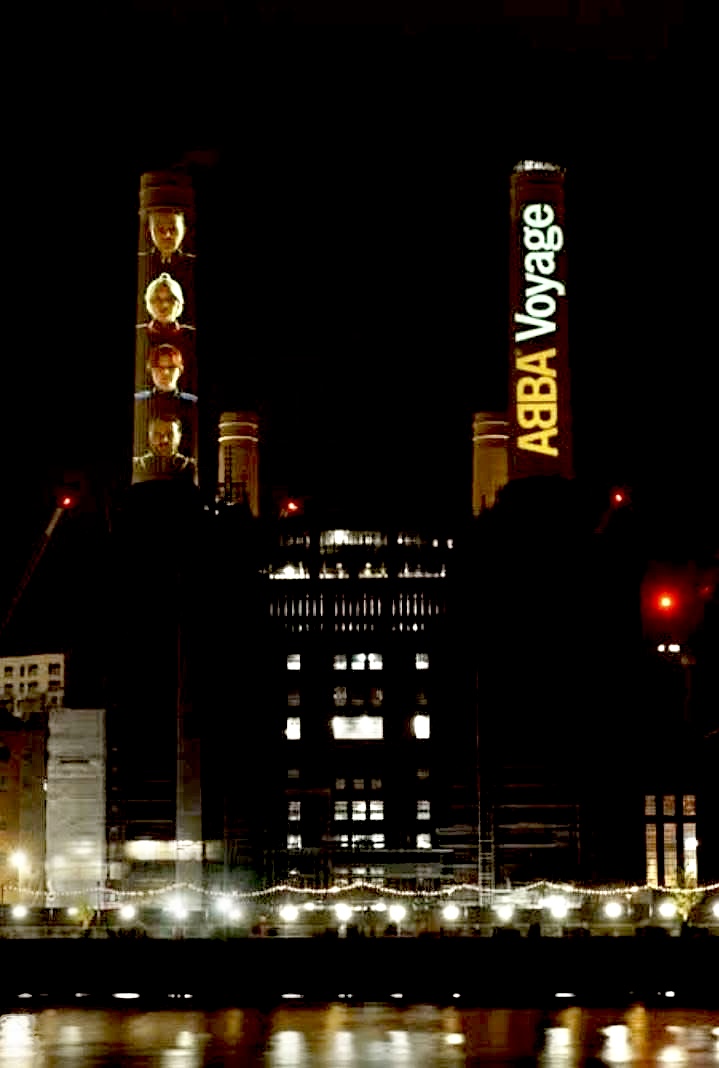
There was a lot of advertising on the launch voyage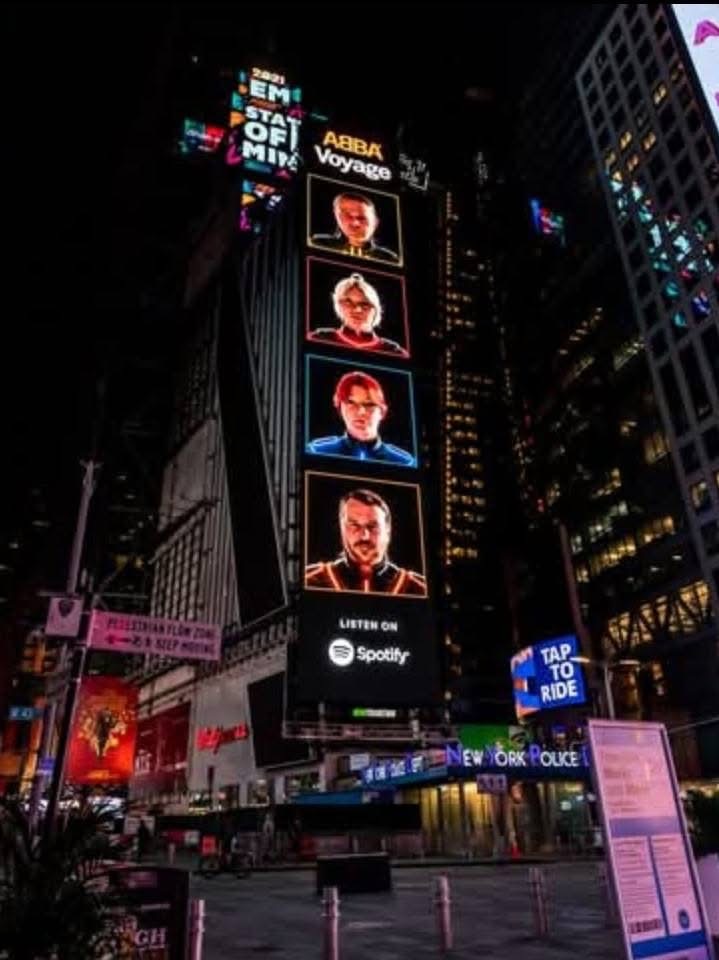
My Obsesion with ABBA
My love for ABBA began when I was nine years old, the night I first heard “SOS” at a bonfire. The sound struck me as completely different—so fresh and unique for 1975—that I couldn’t get it out of my head.
From that moment, I was hooked. I searched the radio, eager to hear it again and to find out who was behind this incredible music. At the time, I was going through some very dark moments in my life, and ABBA’s songs became something I could hold on to. After SOS came one hit after another—Dancing Queen among them—and their music quickly became a real source of comfort and joy for me.

The ABBA Live sound
Stockholm
A trip to Viggso


- Located east of Stockholm, Sweden, Viggsö is part of the outer archipelago, reachable by boat.
- It’s known for its rocky shoreline, pine forests, and peaceful summer houses — a very typical Swedish “skärgård” (archipelago) atmosphere.
- It’s not heavily developed, which made it a perfect retreat for artists looking for privacy.
ABBA’s connection to Viggsö
- In the mid-1970s, Björn Ulvaeus and Benny Andersson bought a small hut on Viggsö.
- They used it as a songwriting hideaway, often bringing a portable tape recorder to capture ideas.
- Several ABBA classics began here, including SOS, Fernando, and early drafts of Dancing Queen.
- The isolation of the island meant there were few distractions — just sea, forest, and the sound of gulls — which helped them focus on music.
- Agnetha Fältskog and Anni-Frid Lyngstad sometimes joined them there for rehearsals, though the recording work happened back in Stockholm studios.
The Viggsö hut became part of ABBA lore — almost like a Scandinavian equivalent of The Beatles’ Abbey Road studio, but much more rustic. Today, ABBA fans sometimes visit the archipelago on boat tours, but the specific hut is privately owned.
🎵 1974 – 1975: Early Viggsö Sessions
- SOS – The melancholy piano riff and main structure were developed on Viggsö in 1974, later recorded in Stockholm for the ABBA (1975) album.
- Mamma Mia – The hook and rhythm idea came together here in late 1974.
- Tropical Loveland – The light reggae feel was experimented with on the island during breaks from bigger hits.
🎵 1975 – 1976: The Big Breakthrough Period
- Fernando – Initially intended for a Frida solo project, the melody and lyrics took shape on Viggsö’s porch overlooking the water. Released 1976, it became one of ABBA’s biggest global hits.
- Dancing Queen – The famous chord sequence and feel were demoed on Viggsö in the summer of 1975. The group worked out the arrangement back in the city.
- When I Kissed the Teacher – The playful narrative was first sketched there.
🎵 1977 – 1978: The Peak Years
- The Name of the Game – Björn and Benny worked on the complex chord changes at Viggsö before bringing it to Polar Studios.
- Thank You for the Music – Early drafts were played on a battered upright piano in the hut.
- Eagle – The dreamy guitar and synth textures were inspired by the island’s open skies and birdlife.
🎵 1979 – 1981: Later ABBA
- The Winner Takes It All – Björn began lyric drafts here in 1980, during a very personal period in his life.
- Slipping Through My Fingers – Written while thinking about family moments on the island.
Why Viggsö worked so well for ABBA:
- Isolation – No ringing phones, no press, just music.
- Nature’s rhythm – The quiet lapping of the water and long summer nights gave them a sense of timelessness.
- Practicality – Close enough to Stockholm for quick trips to the studio, but far enough to feel like a world away.
The ABBA Muesum
The Fabulous Frida
Frida (Anni-Frid Lyngstad) was born on 15 November 1945 in Bjørkåsen, Ballangen, a small village in northern Norway.
Frida's full title is Princess Anni-Frid Synni of Reuss, Dowager Countess of Plauen
This title came from her marriage in 1992 to Prince Heinrich Ruzzo Reuss of Plauen, a German prince. Through that marriage she became part of the House of Reuss, a historic German noble family.
Early Years
Frida moved to Sweden as a young child with her grandmother after her mother passed away, and she grew up there—so although she was born in Norway, she was raised in Sweden and is usually associated with Swedish music and culture.
She married bandmate Benny Andersson in 1978, though they later divorced. Frida also experienced personal tragedies, including the loss of her daughter in a car accident in 1998.
In the 1990s she married Prince Heinrich Ruzzo Reuss of Plauen, becoming a princess, and lived in Switzerland. After his death in 1999, she remained there and has largely lived a private, quiet life.
Despite stepping back from the spotlight, she still occasionally appears at ABBA-related events and has stayed connected to fans worldwide
Fridas Vocals
Frida's voice was mezzo-soprano, warm and expressive, and she often contrasted beautifully with Agnetha Fältskog’s higher, brighter soprano. Together, their harmonies became one of ABBA’s signature sounds.
Characteristics of Frida’s vocals:
Versatile – She could deliver both tender, emotional ballads and powerful, rock-inspired performances.
Darker tone – Compared to Agnetha’s crystalline voice, Frida’s tone was deeper and richer, which gave balance to the group’s sound.
Expressive interpretation – She was especially skilled at conveying emotion, sometimes with a slightly theatrical flair.
Strong harmony singer – Much of ABBA’s success came from the blend of Agnetha and Frida, with their different timbres complementing each other perfectly.
Notable performances:
“Fernando” – Frida’s warm, storytelling voice carries the verses.
“Knowing Me, Knowing You” – She delivers the main vocal with dramatic intensity.
“Money, Money, Money” – Showcases her theatrical and almost cabaret-like delivery.
“I Have a Dream” and “Super Trouper” – Demonstrate her ability to blend seamlessly with Agnetha in harmonies.
In short, Frida’s vocals brought depth, emotion, and contrast to ABBA’s music. Without her darker, more dramatic qualities, the group’s sound would have been much brighter and possibly less dynamic.


Comments
Post a Comment